WEDNESDAY, JANUARY 13, 2016
December 7, 2015Volume 25Issue 43
Several publicly-traded health systems reported elevated numbers of uninsured patients at their facilities in the third quarter of 2015, raising questions among health insurance industry watchers about the long-term viability of the exchanges. But hospital executives and advisers say there are a number of underlying causes at play, and that it’s far too soon to panic.
“A lot of the insurers were saying basically when they were reporting third quarter results that they were seeing a lot of attrition in the Affordable Care Act policies,” says Steve Zaharuk, senior vice president at Moody’s Investor Service. Insurers were reporting faster rates of attrition than in 2014, which Zaharuk says could be attributed to any number of factors, including failure to pay premiums or acquisition of employer-sponsored insurance. But higher premiums and other cost factors very well may have driven people off the exchanges, he says.
“We’ve seen some regions where the increases in premium, the increases in copays and out-of-pocket [costs], and the decreases in the network are saying there’s a big change afoot as far as the attractiveness for these policies for 2016,” he says. “Maybe this is the beginning of a trend, because there are some signals out there that there could be a problem with these policies for 2016.”
Higher patient volumes translate to a plus for hospitals, as long as the patients making the claims have insurance. Gallup on Oct. 8 pegged the uninsured rate to 11.6% in the third quarter, down from 11.9% in the first quarter, which is why hospital conglomerate HCA Holdings, Inc.’s reported increase of uninsured patients set off a few alarms.
The health system’s uninsured admissions went up 13.6% in the third quarter when compared with the year-ago period, totaling approximately 4,400 admissions. HCA saw the numbers increasing in the second quarter, Chief Financial Officer Bill Rutherford said during the third quarter earnings call.
But it’s too soon to tell if it’s a trend, says Dean Diaz, senior vice president at Moody’s Investor Service. Diaz points out that HCA has a large concentration in two states that did not expand their Medicaid programs: Florida and Texas.
In the call, Rutherford conceded that while the elevated number of uninsured was seen across its markets, those two states accounted for nearly 75% of all uninsured admissions. Rutherford attributed one quarter of the increase to processing delays in Texas and Kansas for newly eligible Medicaid recipients, and 10% of the total to exchange members who lost their insurance.
Uninsured Rates Are Fluctuating
Matthew Borsch, lead health care research analyst at Goldman Sachs, asked if HCA executives thought something could be “brewing” in terms of whether exchange members see value in health coverage, given that when they’re uninsured, most of their care is written off due to inability to pay.
HCA President of Operations Samuel Hazen said that the effects of health reform have been “materially in line” with HCA expectations, and that exchange growth is up year over year. “So we are still seeing solid growth,” he said. “Now the issue of seeing some reduction in terms of lives in the exchanges is reality as well. I don’t have data through the third quarter; I have CMS data through June where I can compare the number of lives in the exchange as of end of March as compared to end of June at 2015. And there is a decrease at the end of June. Nationally it’s about 2.3% fewer lives in the exchange and for HCA states it’s about 3%.”
Rosemarie Day, president of Massachusetts-based Day Health Strategies, believes the uninsured rate has remained stable, since just about all observers aside from a few hospitals are reporting flat or decreased uninsured rates.
“The uninsured rates have totally gone down, no question about it,” she tells HPW, citing data from Gallup and the U.S. Census Bureau that said both employer-sponsored coverage and direct purchase rates have either maintained or increased. “Overall, bottom line is, [a] reduction in the uninsured [and] more people with insurance of all types.”
Tenet Healthcare Corp. also reported a 3.7% uptick in the number of charity and uninsured patients compared with the third quarter of 2014, pointing to Florida and Texas as well. In response to a question from Morgan Stanley analyst Andrew Schenker, Tenet Chief Financial Officer Daniel Cancelmi said the company has actually seen a decline in the number of uninsured year-to-date.
“We feel very confident about what we can generate in terms of additional growth from exchange patients as well as some growth in Medicaid expansion states,” he said. “So, there’s nothing in particular that we saw that seems like a trend that we are overly concerned about.”
President of Hospital Operations Britt Reynolds added that exchange growth in Texas and Florida had increased significantly, and CEO Trevor Fetter said the market has been a major plus for the company.
“[The exchange market has] been a great product for us. We continue to drive substantial gains in volumes in this quarter,” he said. “It was 53% in the exchange volumes, and I think those are well established now as a marketplace for individuals to buy insurance. And as I mentioned in my prepared remarks, one of our strategies has been to have very attractive offerings on those exchanges that include our hospitals, and we hit a record high of 90% of our hospitals being in the lowest cost silver plan networks.”
At Community Health Systems, the uninsured rate remained flat for the quarter at 5.8% year over year, with the hospital pointing in part to another non-expansion state, Tennessee, along with Florida. But a November report from accounting and consulting firm Crowe Horwath found that hospitals on the whole experienced a 31.2% decline in their uninsured rates from January 2014 to September 2015.
Still, the shifting dynamics of the exchange market are likely to blame for at least some fluctuation in the uninsured rate. Jim Whisler, national leader of Deloitte’s health actuarial practice, says he has also seen a few hospitals reporting increases in the number of uninsured patients.
“With the large rate increases in many of the exchanges, the federal government admits it’s getting harder to attract people to the exchanges, because you know initially they got a lot of the sick people who really needed insurance, and now they’re trying to attract the healthier people who may make the decision to pay the penalty versus getting the insurance. So maybe what they’re seeing is that this trend of reduced uninsurance is starting to reverse itself. I guess I wouldn’t be too surprised if that’s a recent phenomenon.”
MONDAY, NOVEMBER 30, 2015
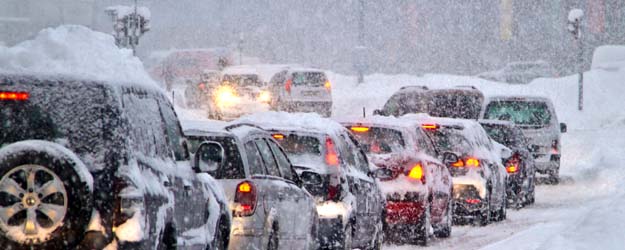
How to Drive in Winter Weather
Blowing snow. Low visibility. Icy conditions. Winter calls on drivers to use skills that just aren’t needed throughout the rest of the year. So, brush up on yours with these tactics and tips. Because, even if you're an expert winter driver, plenty of other people out there are not.
- Don’t just jump in the car and go. First things first, make sure you and your car are ready for the conditions ahead. You should be well-rested and focused. Your car (preferably front-wheel or four-wheel drive) should have a full tank of gas, working windshield wipers, the right tires and the necessary emergency supplies. Completely clean off and defrost the windshield and windows, turn on your lights for visibility and buckle up.
- Do start, stop and steer steadily. Flooring it, slamming on the brakes and jerking the steering wheel wildly can all lead to trouble. Instead, do everything gradually. Accelerate slowly so your wheels don’t spin out. Brake early and gently to maintain control of the vehicle. Finally, make slow, moderate adjustments to the steering wheel when you need to change lanes or make a turn.
- Don’t use the cruise control. Even if your car is skidding, your cruise control may attempt to maintain a constant speed, potentially accelerating the vehicle and spinning the wheels as you’re trying to regain control. Hitting the brakes to deactivate the cruise control could cause further harm.
- Do let off the accelerator if your car starts to skid. We know it’s easy to panic, but try to remain calm and, once you feel your tires regain traction, slowly turn the steering wheel in the direction you want the front of your vehicle to go. Be prepared to counter-steer and stay off both the gas and the brake until you have control of the vehicle again.
- Don’t follow too closely. Increase the space you leave between you and other vehicles both when following another car and pulling over in front of one after passing it, especially snowplows or large trucks. You also need more lead time when pulling out in front of a car.
- Do consider the terrain. When driving in winter weather, certain areas signal the need for greater caution. These include bridges and overpasses, which can freeze over before other parts of the road, freeway on- and off-ramps that snowplows may have skipped and any area that doesn’t receive direct sunlight and may have black ice.
Above all, remember the most basic tenet of driving in any type of inclement weather: Give yourself ample time to respond. So, slow down. Or, just stay home, if you can. Because, even with careful driving and these tips, something could still happen. And, staying home sure beats being stuck in a snowy ditch!
Your Car Insurance Helps Protect You in All Types of Weather
Having the auto insurance coverage you want can help keep you on solid ground, even in slippery conditions. So, regularly review your policy with your independent insurance agent to ensure you’re happy with your deductible, your coverage levels and your options, such as roadside assistance. Feel free to contact us here at PMA Insurance Services at (703) 449-1327 so we can assist you and to get started building your auto policy.
MONDAY, NOVEMBER 30, 2015
by James Middleton | Nov 30, 2015
The combined forces of alternative capital resources and overabundance in the property/casualty market have ushered in a surprisingly strong soft market cycle, and a recent report from Willis North America anticipates widespread rate decreases for the following year.
However, in spite of this environment, the risk advisory and brokerage firm has identified five P/C lines it expects to buck the trends in its “Marketplace Realities 2016” report, with cyber leading the way and effecting other lines in its wake.
“There is no escaping cyber exposure,” said Matt Keeping, chief broking officer with Willis. “Cyber also impacts errors and omissions, as breach incidents are often covered in part by E&O policies; this was the only line that moved from the ‘flat’ category into ‘expecting increases’ category since the spring.”
In full, the five lines expected to carry rate increases in 2016 include:
1. Cyber – Non-POS Retail and Large Healthcare flat to +15% and POS Retail and Large Healthcare +1-% to 150%
Large losses in the retail and healthcare sectors have caused a few markets to stop writing large accounts and others to increase their premiums significantly. Underwriting requirements also continue to rise, and carriers are becoming more selective about the risks they take on.
2. Employee Benefits – Self Insured +4% to +5% and Fully Insured +7.5% to +8.5%
New prescription drugs in the biologic and biosimilar categories are contributing to a rise in prescription costs, pushing employee benefits to higher costs. The industry is also continuing to embrace wellness programs, but is moving on from a return-on-investment focus on medical costs to a value-on investment focus on a broader set of criteria, according to Willis.
3. Errors & Omissions – Self Insured +4% to +5% and Fully Insured +7.5% to 8.5%
Rising claims are expected to cause slight increases for many buyers in the month ahead, though competition from new carriers and traditional carriers seeking to expand market share is limiting upward pressure on rates to low single digits or even flat renewals. Willis expects industries most at risk for large claims and litigation to see the most upward pressure on rates.
4. Fidelity – Flat to +5%
Several of the largest fidelity markets lost money or earned only marginal profits last year, resulting in large losses. However, the balance of the market has achieved favorable results and large increases are not expected. Employee theft remains the leading source for claims under both commercial crime and financial institution bonds, with a particular rise in electronically enabled theft.
5. Kidnap and Ransom – Flat to +5%
Kidnapping risk for employees is up as political tensions escalate, leading to potential increases for buyers with overseas exposures – particularly in Mexico, Yemen, Libya, Syria and Lebanon. Closer to home, however, buyers with exposures in the US can actually expect flat renewals and even potential rate decreases up to 5%.
The Willis report also included a list of lines predicted to deliver a mix of small increases and decreases. These include: workers’ compensation, auto, construction, directors and officers, employment practices liability, environmental and fiduciary.
SUNDAY, JANUARY 25, 2015
Reassess your homeowner’s policy on an annual basis with these five steps.
Reviewing your homeowners policy may not rank high on your annual home-maintenance checklist. Yet following the five steps below will save you big bucks now and a lot of grief down the road. After the recent slew of natural disasters, average annual premiums are expected to surpass $1,000, with some owners likely to see double-digit rate hikes. Haven’t taken a close look at your policy lately? Then dust it off and make insurance your next project.
Measure How Much Coverage You Need
Your No. 1 priority must be the house itself. “Possessions, living expenses, and liability should all be secondary,” says Amy Bach of United Policyholders, an insurance advocate group.
Don’t base your coverage level, though, on the home’s appraised value, which includes land costs. Instead, says Kevin McCarty, president of the National Association of Insurance Commissioners, use the recent per-square-foot replacement costs in your area, available from your local homebuilders association. The difference can be sizable. In New York state, land makes up 9% of the average home’s value, according to the Lincoln Institute. In Hawaii, it represents more than half.
Is your area prone to natural disasters? Price out extended or guaranteed replacement policies, which protect you from inflated labor and material costs following such catastrophes.
Inspect What’s Not Covered
Don’t assume that all “perils” are covered. As homeowners learned the hard way after Hurricane Irene last August, standard policies exclude damage from flooding, not to mention earthquakes and landslides. “Most people aren’t aware of what their policy does and doesn’t cover until they file a claim,” says Deeia Beck, executive director of the Office of Public Insurance Counsel, a state consumer agency in Texas.
If you live in a high-risk area for floods, you may be required to add supplemental coverage, which can cost $1,700 to $3,300 on a $150,000 building and $50,000 worth of contents.
Also, take note of common exclusions, such as those on mold and even broken pipes owing to lack of routine maintenance. You know which nuisances your home is susceptible to. Use that knowledge to beef up coverage by adding so-called endorsements. Been a victim of sewage backups, which aren’t covered by most standard policies? Insure against them for anywhere from about $100 to $250 a year.
Recheck the Deductible
It may not be the same as it was a year ago. Many insurers are retooling deductibles from set dollar amounts to percentages, which can often represent a substantial change.
In general, you want to go for the highest deductible you can afford to lower your premiums. Beware, though, that not all insurers that are making this switch from dollars to percentages are cutting premiums at the same time. Also, be mindful that these deductibles are a percentage of the insured value of your entire home, not of what needs to be fixed. So if you have a $400,000 home, even a 5% deductible may be too steep a price to pay, and a reason to shop around.
Hammer Away at Your Premium
Insurers don’t always spell out how much your rates shot up on renewals. So dig out last year’s documents and compare for yourself. If your rates rose 5% or more, make sure to call the company for an explanation.
Knowing whether the increase resulted from changes in your risk profile or from broad-based increases in the marketplace will help you negotiate and comparison-shop—which you should do at every renewal or at least every couple of years.
In addition to bumping up your deductible, you can lower your premium by bundling together your home and auto insurance, which can shave off from 5% to 15%. Also, installing security systems, storm shutters, or a new roof can chip away another 15%. Before you make that commitment, though, check with your insurer to see if your installation qualifies, says Jeanne Salvatore of the Insurance Information Institute.
Clean Up Your Work Area
Finish your project by getting all your documents in place. If you haven’t already done so, conduct a home inventory (contact PMA Insurance Services for a worksheet). Pair that with receipts, photos, or videos and then store all your paperwork—along with a complete copy of your insurance policy—in a fireproof box.
For extra protection, scan and store all of that information digitally on a flash drive, and remember to keep that off-site, says Bach. If disaster strikes, you don’t want this critical information to be at risk too.
Contact Us!
At PMA Insurance Services, we can work with you to make sure you’ve got the coverage you need, while at the same time using all possible credits and discounts to make that coverage affordable.
Just give us a call at (703) 449-1327 or send us a note at info@pmabenefits.com . We want to help you meet your goals, and make sure what’s important to you is protected!
Content provided by This Old House.
Posted 3:21 AM View CommentsTags: about, pma insurance services chantilly, independent agency, get a quote, home insurance discounts, home insurance chantilly, homeowners insurance, independent insurance agent, insurance agent fairfax, insurance renewal, safeco insurance
SATURDAY, JANUARY 17, 2015
 Builders risk insurance, also called course of construction insurance, is insurance designed for buildings during the construction process. Builders risk insurance, also called course of construction insurance, is insurance designed for buildings during the construction process.
As a builder (or property owner) you know that during construction, projects are subject to a wide variety of risks or damage. While under construction, a project could suffer from damages due to high winds, fire, or sabotage of some nature. Builders risks policies can be written specifically to cover the construction term; usually three, six, or twelve months and the policy will cover the same perils of most property polices including fire, wind, theft, vandalism, lighting, etc.
Who Should Consider Builders Risk Insurance?
There are a number of parties involved in a new construction project. Each party has an interest in the project, and might consider builders risk insurance. The contractor, project manager, and building owners all have interests that need to be protected.
Contractors, owners and project managers often mistakenly think their business insurance policy will cover building during the course of construction. There will be no coverage under a standard business policy for property loss, unless it has been added by endorsement or under a separate policy.
Excluded Property Under A Builders Risk Policy
There is a relatively short list of property that is not covered under a builders risk policy. This includes automobiles, landscaping, money, contractor’s tools, equipment and machinery.
If you have purchased a builders risk insurance policy for a project or building, make sure to read your policy carefully to become familiar with the policy language and find out whether there are any exclusions or items that will not be covered.
Our agents at PMA Insurance Services, are experts when it comes to making sure you have the coverage you need for your building project. If you are involved in (or planning) a construction project in the near future, call us today at (703) 449-1327!
Posted 10:31 AM View CommentsTags: about, allied insurance, builders insurance, pma insurance services, builders risk insurance, business insurance, commercial insurance, course of construction insurance, independent insurance agent, insurance, insuring my construction project, virginia insurance agent, washington, d.c.
|
Blog Archive
2026
2024
2022
2021
2018
2017
2016
2015
2014
2013
2012
2011
|